




.svg)



If you operate in the US market, compliance is not a “nice to have.” It is a daily operational reality. From data privacy laws to financial regulations and industry-specific standards, your data environment is constantly under scrutiny. That is where US-based compliance-ready metadata platforms come in. These platforms act as the foundation that connects governance, audits, security, and operational visibility across your data ecosystem.
You are no longer managing just databases and dashboards. You are managing access policies, lineage, ownership, retention rules, and regulatory evidence. Without a compliance-ready metadata layer, even well-funded organizations struggle to maintain trust and audit readiness.
Modern enterprises are increasingly relying on data observability platforms to maintain visibility and reliability across complex systems, ensuring data quality, lineage, and governance are continuously enforced rather than manually validated.
In this guide, you will learn what compliance-ready metadata platforms really mean, how teams use them in practice, how startups approach compliance tooling, and what capabilities you should evaluate before making a decision.
What Is a Compliance-Ready Metadata Platform?
A compliance-ready metadata platform is not just a catalog that lists your data assets. It is a governance control system that actively helps you meet regulatory requirements by tracking how data is created, accessed, transformed, and used across your organization.
In practical terms, a compliance-ready platform helps you:
- Automatically classify sensitive data such as PII, financial records, and healthcare information so you do not rely on manual tagging.
- Maintain end-to-end lineage so you can prove where regulated data came from, how it changed, and where it is consumed.
- Enforce access policies in real time by aligning metadata with role-based permissions and compliance rules.
- Create audit-ready documentation with built-in logs, ownership tracking, and compliance evidence.
- Monitor metadata freshness and accuracy so policies apply to current data, not outdated assets.
Modern platforms rely heavily on metadata to track lineage, dependencies, and usage patterns across systems, enabling better governance and compliance visibility.
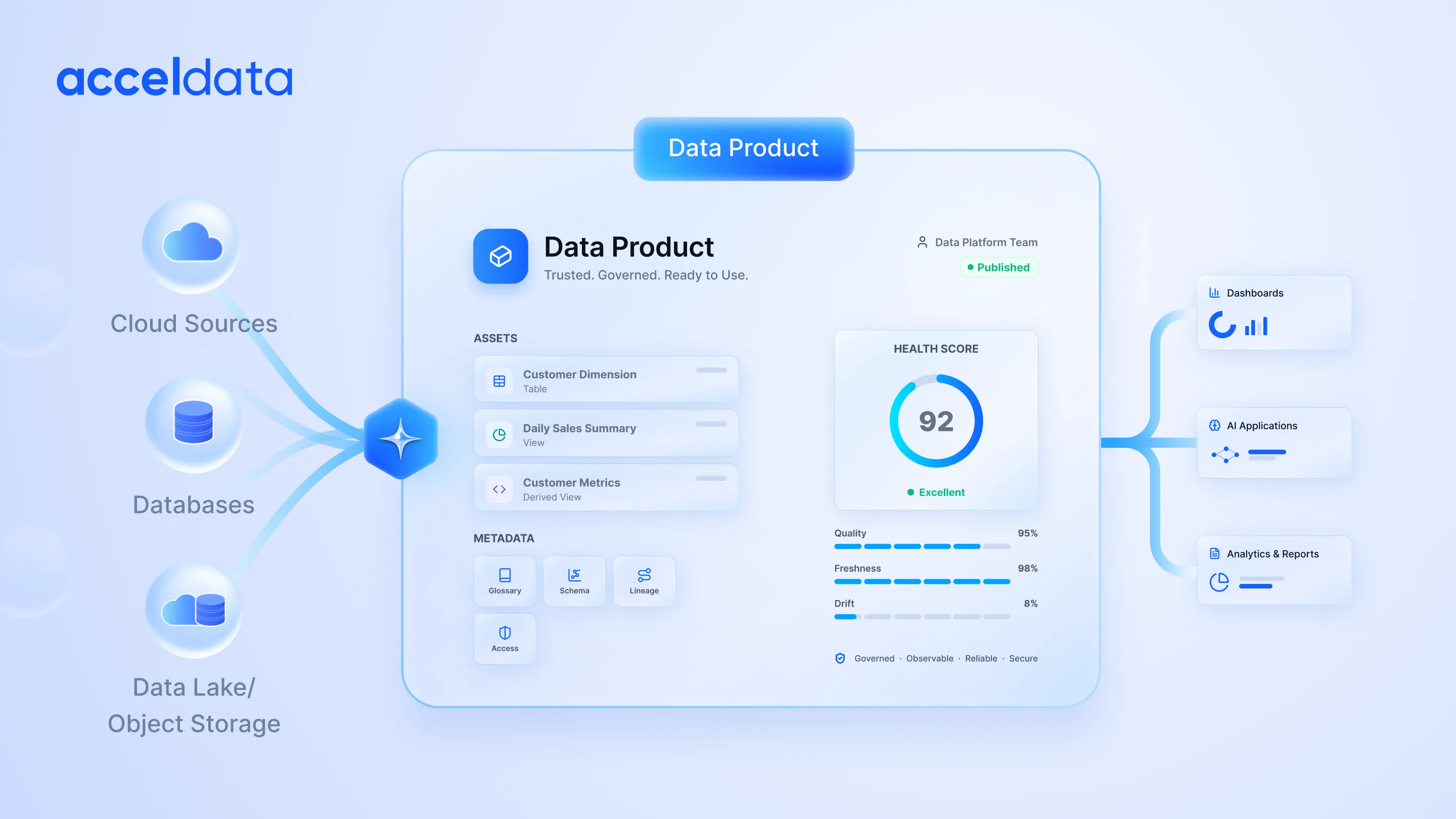
For example, platforms like Acceldata provide a comprehensive view of the entire data journey, helping teams trace transformations and dependencies across pipelines—critical for compliance and audits
Compliance Management Platforms — What Are You Using?
If you ask this question inside a data engineering Slack channel, you will get dozens of different answers. Some teams rely on standalone compliance tools. Others use governance platforms. More mature organizations combine metadata platforms with GRC systems to create a full compliance stack.
The reality is simple. Compliance today is no longer just about checklists and reports. It is about real-time visibility, continuous monitoring, and automated controls across fast-moving data environments.
Metadata Platforms vs Standalone Compliance Tools
Standalone compliance tools focus on policies, risk registers, and audit workflows. They are great at documentation, but often disconnected from actual data activity. Metadata platforms work at the data layer. They track assets, lineage, ownership, access patterns, and classification in real time.
Here is the practical difference:
- A standalone tool tells you what policy exists.
- A metadata platform shows you whether that policy is actually enforced on your data.
This is why many enterprises are shifting toward metadata-driven observability, where systems continuously monitor lineage, schema changes, and data health across environments.
How Teams Combine Metadata With GRC Solutions
Most large US enterprises do not choose between metadata platforms and GRC tools. They connect them.
Metadata platforms feed real-time data context into GRC systems so compliance teams can:
- Pull live asset inventories for audits
- Validate policy enforcement using lineage and access logs
- Track ownership accountability across teams
- Monitor compliance drift as data pipelines evolve
This integration is essential because modern data environments are highly distributed, and visibility across systems is critical for maintaining governance.
Trends in Enterprise Compliance Tooling
Compliance tooling is rapidly shifting from manual governance to automation-first platforms.
Here is what you are seeing across US enterprises:
- Move from static documentation to real-time monitoring
- Increased focus on data-level compliance instead of system-level controls
- Integration of AI and automation for classification and risk detection
- Growing adoption of metadata-driven governance models
If you are still relying only on spreadsheets, ticketing systems, or standalone compliance tools, you are already behind the curve. Modern compliance strategies depend on metadata platforms that connect policy, data, and operations into a single governance layer.
This also aligns with the rise of data observability platforms, which help organizations detect and resolve data issues before they impact business outcomes.
Where Can I Get Compliance Management Software for My Start-Up?
If you run a startup, compliance might feel overwhelming. You want to move fast, ship products, and grow users. But ignoring governance early almost always creates expensive cleanup later. Start-ups don’t need heavy enterprise compliance stacks on day one, but they do need a foundation that prevents future compliance debt.
Here’s how early-stage companies should approach it.
Compliance-Ready Metadata Platforms for Start-Ups
Instead of buying multiple point tools, many start-ups begin with metadata platforms that combine governance, visibility, and compliance workflows in one layer.
Why this works for start-ups:
- Centralizes data ownership and documentation
- Automatically detects sensitive data
- Tracks lineage without manual mapping
- Prepares you for SOC 2, HIPAA, or GDPR early
Lightweight vs Enterprise-Grade Options
Not all platforms are built the same. Start-ups should evaluate tools based on current needs and near-term growth.
Lightweight tools are best when:
- You have a small data stack
- Compliance needs are limited to SOC 2 or basic privacy controls
- Teams want fast setup and minimal configuration
Enterprise-grade platforms make sense when:
- You operate in healthcare, fintech, or regulated SaaS
- You manage customer PII at scale
- You plan to raise institutional funding
- You expect rapid data growth
Build vs Buy Considerations
Some founders consider building internal compliance tooling. While this works for very basic needs, it rarely scales well.
Building in-house works if:
- You only need basic tagging and documentation
- Your data footprint is small
- Compliance scope is minimal
Buying makes sense when:
- You need automated classification and lineage
- Audits are on your roadmap
- You want standardized governance workflows
- Security and compliance certifications matter
For most start-ups, buying a purpose-built platform is more cost-effective long-term.
Scaling Compliance as the Business Grows
The biggest mistake start-ups make is treating compliance as a one-time project. Compliance must evolve as the company scales.
A strong compliance-ready metadata foundation helps you:
- Add new data sources without breaking governance
- Expand into regulated markets
- Support enterprise customers
- Pass audits faster
- Reduce operational risk
By building compliance into your data layer early, you avoid future bottlenecks and maintain operational agility as your company grows.
Key Compliance Capabilities to Look for in US-Based Metadata Platforms
Not all metadata platforms are truly “compliance-ready.” If you’re evaluating US-based solutions, focus on capabilities, not brand names. The right platform should reduce compliance risk, automate governance, and scale with regulatory complexity.
Here are the most important evaluation criteria to prioritize:
1. Automated Data Discovery and Classification
Manual tagging doesn’t scale. Your platform should automatically identify and classify:
- PII (emails, SSNs, phone numbers)
- Financial data
- Healthcare and regulated fields
- Sensitive customer attributes
Why it matters: Automated compliance tooling can cut audit preparation and documentation time by large margins compared to manual processes.
2. End-to-End Data Lineage Tracking
Strong platforms provide full visibility into:
- Source systems
- Transformation logic
- Downstream dashboards and models
- AI and analytics consumption layers
What to check:
- Column-level lineage
- Cross-tool lineage (ETL → warehouse → BI)
- Real-time lineage updates
Automated lineage tracking helps teams resolve data incidents faster by instantly revealing dependencies.
3. Role-Based Access Controls and Policy Management
Compliance-ready metadata platforms must integrate with enterprise identity systems and support:
- Fine-grained role permissions
- Data access policies
- Attribute-based access control (ABAC)
- Approval workflows
This ensures only authorized users can access regulated data, and audit trails are always available.
4. Audit Logging and Evidence Readiness
Audits shouldn’t require weeks of manual evidence collection.
Look for platforms that automatically log:
- Data access history
- Permission changes
- Schema modifications
- Governance actions
5. Metadata Freshness and Real-Time Sync
Outdated metadata is dangerous.
Your platform should:
- Sync automatically with warehouses and the pipeline
- Detect schema changes
- Refresh lineage in near real-time
- Flag stale or broken assets
Actively monitor metadata health and automate quality checks can reduce reporting errors because continuous validation prevents outdated definitions and inconsistent interpretations from spreading across teams
6. Centralized Search and Discovery Layer
Compliance teams and analysts must find trusted data quickly.
Key capabilities include:
- Unified data catalog
- Business glossary integration
- Compliance tag search
- Ownership visibility
Centralized metadata indexing improves data discovery time, significantly improving productivity.
7. Regulatory Framework Mapping Support
Strong platforms allow mapping metadata assets to:
- SOC 2 controls
- HIPAA safeguards
- GDPR requirements
- CCPA privacy rules
This makes compliance traceable and defensible during audits.
8. Integration With Existing Data Stack
Your metadata platform should connect seamlessly with:
- Cloud data warehouses
- ELT and ETL tools
- BI platforms
- Identity providers
- GRC systems
Fragmented metadata and siloed tooling create discovery inefficiencies that slow insight delivery and governance. Organizations with centralized metadata practices experience fewer analytics delays because information is easy to find and contextualize across systems.
9. Scalability and Performance
As data volumes grow, compliance complexity increases.
Evaluate:
- Support for large asset catalogs
- Performance at scale
- Multi-cloud and multi-region support
- Enterprise user concurrency
10. Security and Compliance Certifications
US-based enterprises should verify that the platform itself is compliant.
Look for:
- SOC 2 Type II
- ISO 27001
- GDPR readiness
- Encryption at rest and in transit
This ensures your compliance tooling doesn’t become a security risk.
Final Takeaway
A compliance-ready metadata platform is not just a catalog; it’s a governance engine. The right solution should automate classification, enforce access controls, provide real-time lineage, and simplify audits.
When evaluating platforms, focus on automation depth, integration strength, audit readiness, and scalability. These capabilities determine whether your compliance strategy stays reactive or becomes a competitive advantage.
Common US Compliance Requirements: Metadata Platforms Support
Compliance-ready metadata platforms in the US typically support a broad range of regulations and frameworks.
Healthcare companies depend on HIPAA to protect patient records and clinical data. Financial institutions must comply with SOX for financial reporting controls and PCI DSS for securing payment information. SaaS and digital platforms often deal with GDPR and CCPA, especially when handling international users or California residents.
This is where metadata platforms become critical. They help you automatically tag regulated datasets, apply access restrictions, track data lineage, and enforce retention and deletion policies. Instead of relying on spreadsheets and manual audits, you get technical visibility into where sensitive data lives and how it moves.
For example, if a customer requests data deletion under privacy regulations, metadata lineage helps identify every downstream location where that data exists. Without lineage, teams often miss hidden copies and derived datasets.
This is one of the biggest reasons regulators increasingly expect technical evidence, not just policy documentation.
Turn Metadata Into Your Compliance Advantage with Acceldata
Compliance isn’t something you handle at the last minute; it’s a continuous, built-in part of how modern organizations operate. As your data grows and workflows become more complex, manual governance can’t keep up.
A compliance-ready metadata platform transforms the way your teams work. It brings clarity to your data, automates policy enforcement, and ensures that audits are no longer stressful events but routine checkpoints. With the right metadata strategy, your organization can act confidently on trusted data, respond to risks faster, and scale operations without compromising security or governance.
When you adopt a strong metadata platform, you gain more than audit readiness. You gain operational clarity, faster incident resolution, better security posture, and stronger trust across your organization.
That shift is already happening across industries. The question is not whether you will need compliance-ready metadata. The real question is how soon you are ready to implement it.
Don’t wait for compliance challenges to slow you down. Build them into your data foundation from day one.
Book a demo with Acceldata and see how smarter metadata drives faster insights, stronger governance, and worry-free audits.
FAQs about US-Based Compliance-Ready Metadata Platforms
What are US-based compliance-ready metadata platforms?
US-based compliance-ready metadata platforms are tools designed to manage data governance, lineage, classification, and audit readiness in alignment with American regulatory standards. They connect technical metadata with compliance workflows to support continuous governance instead of manual reporting.
Which are the US-based compliance-ready metadata platforms?
Several platforms operating in the US market focus on compliance-ready metadata management, including enterprise governance tools and modern data observability platforms. Instead of choosing based on brand alone, you should evaluate integration depth, automation capabilities, and audit readiness features.
How do metadata platforms support compliance management?
They automate data classification, track lineage, monitor access patterns, and generate audit evidence. This reduces manual compliance effort and ensures governance policies are enforced at the system level.
Compliance management platforms — what are you using??
Most enterprises combine metadata platforms with GRC tools and security platforms. This hybrid approach allows governance policies to be defined centrally while enforcement happens through technical metadata monitoring.
Where can I get compliance management software for my start-up?
Startups can adopt cloud-native metadata platforms that offer modular pricing and scalable governance features. Starting early helps avoid compliance debt when enterprise customers and regulators become involved.
Are metadata platforms enough for regulatory compliance?
Metadata platforms are not a full replacement for legal or compliance teams. However, they provide the technical foundation that regulators increasingly expect, including traceability, classification, and audit evidence.
How do metadata platforms help with audits?
They automate evidence collection by tracking lineage, access logs, and policy enforcement activities. This reduces audit preparation time and minimizes the risk of missing critical compliance artifacts.
What should US enterprises prioritize when choosing a compliance-ready metadata platform?
You should prioritize automation, lineage accuracy, regulatory coverage, security integration, scalability, and operational visibility. The goal is continuous compliance rather than reactive reporting.
Short Summary
Metadata platforms that are built for compliance give you more than a catalog of data assets; they provide traceability, policy enforcement, and audit readiness across complex data environments. By automating classification, lineage tracking, and access controls, US-based compliance-ready metadata platforms help your team reduce manual effort, improve trust in analytics, and respond confidently to regulatory requirements. Investing in these platforms early, especially as a startup, lets you scale governance with your business and avoid costly remediation later.