.svg)


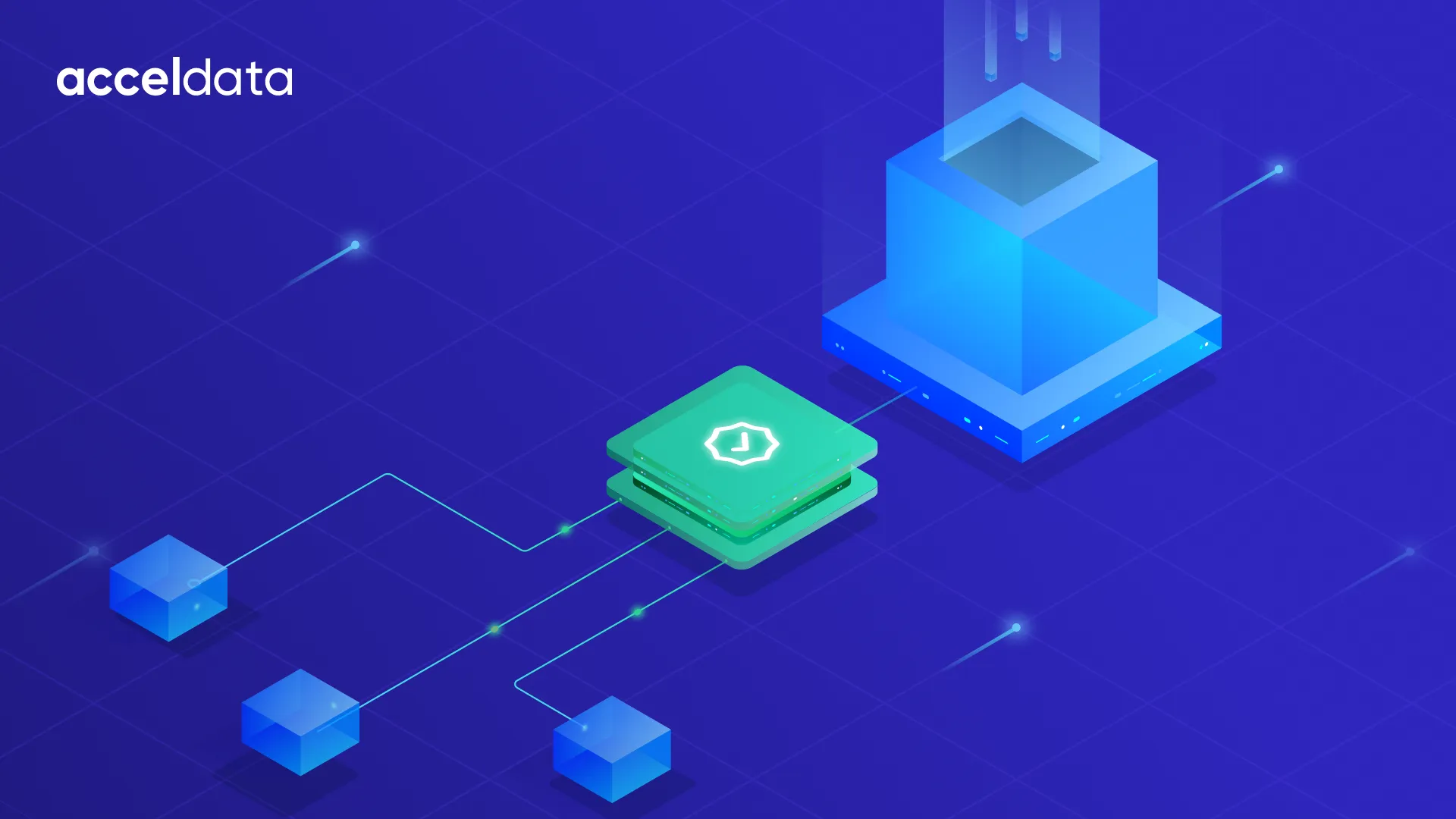

Data contracts define expectations, but only real-time monitoring enforces them. Tools that track schema changes continuously turn contracts into operational guarantees instead of fragile documentation.
You have a data contract. Your pipeline broke anyway. That is not a coincidence. It is what happens when contracts exist only as documentation. A column gets renamed. A data type shifts from integer to string. A nullable constraint quietly flips. Your contract says none of this should happen, and it has no mechanism to stop any of it.
Data contracts are only as strong as their enforcement. Without a system that performs continuous real-time schema change tracking against live infrastructure, your contract is a policy document, not a runtime control. Violations do not surface through governance reviews. They surface through broken dashboards, drifting ML models, and 3:00 AM pipeline failures.
This article is about closing that gap. You will learn what real-time contract enforcement actually requires at the architecture level, which capabilities your enterprise needs to stop relying on reactive triage, and how to evaluate platforms built to make your data contracts executable rather than aspirational.
Why Data Contracts Fail Without Real-Time Monitoring
The concept of a data contract is sound. The traditional execution is not. When your organization attempts to implement data contracts without dedicated data contract monitoring tools, you will consistently run into the same failure modes.
- Schema changes bypass documentation: In agile development environments, engineers move fast. If a developer needs to split a customer_name column into first_name and last_name to support a new application feature, they make the change. Updating the data contract requires a pull request, a cross-team review, and alignment across departments. The developer doesn't wait.
- Producers have no visibility into the downstream impact: The engineer modifying the database schema has no idea that three financial reporting pipelines depend on the exact structure of that table. Without automated tooling bridging the gap, changes happen blindly.
- Consumers discover breakage too late: Your data team only learns about the schema change when ETL jobs fail at 3:00 AM, or worse, when data silently loads with null values for two weeks before a stakeholder flags it in a dashboard.
- No enforcement mechanism exists: Governance teams resort to manual schema reviews, creating a bottleneck that slows platform innovation while failing to catch subtle structural drift. A survey by Acceldata and Censuswide found that 63% of executives dealing with pipeline failures reported a direct negative impact on customer experience. That is the real cost of contracts that exist only on paper.
Key insight: A contract without automated enforcement is just a suggestion.
What Does "Tracking Data Contracts in Real Time" Mean?
To move from documentation to enforcement, you need to shift from passive auditing to active, continuous monitoring. Real-time schema change tracking has four distinct components.
Contract-Aware Schema Monitoring
Your physical database schemas are continuously validated against their logical contract definitions. The platform does not wait for a failure to surface. It constantly compares the live data structure against the agreed-upon contract and flags any divergence the moment it appears.
Change Detection and Diffing
The system performs continuous schema diffing, instantly detecting column additions, deletions, data type changes (such as an integer converting to a string), and semantic drift. It evaluates these changes as they hit the database log, not during a weekly batch review or a scheduled overnight crawl.
Impact-Aware Enforcement
Real-time tracking requires knowing exactly which downstream assets are affected by a change. When a schema change violates a contract, the system must immediately map that violation to the specific dashboards, ML models, or analytics pipelines in your environment that will be compromised.
Event-Driven Alerts
Your team receives immediate, targeted notifications triggered by the schema change event itself, not a daily digest. This allows data engineers to intervene and pause the pipeline before unexpected structural changes cause irreversible downstream failures.
Types of Schema Changes That Break Contracts
Your monitoring tool must catch multiple variations of schema drift. Some changes are benign. Others are catastrophic data contracts governance violations.
- Column removals are the most visible violation. If a downstream pipeline queries SELECT customer_id and the customer_id column has been dropped upstream, the pipeline crashes immediately.
- Data type modifications often cause silent failures. If a numeric revenue column is changed to a VARCHAR string, the extraction may succeed. But when your warehouse attempts mathematical aggregations on a string value, the analytics layer quietly breaks.
- Nullable to non-nullable shifts break strict quality expectations. If a contract stipulates that email_address cannot be null, but the upstream schema is altered to allow nulls, corrupted records flood your analytics environment with no error thrown.
- Semantic meaning changes and hidden PII introduction carry compliance risk. If a developer adds a social_security_number column to a table contracted for public analytics consumption, that data replicates into your systems with no masking policy applied, creating an uncontrolled regulatory exposure.
Core Capabilities Enterprises Should Expect From These Tools
When evaluating schema drift detection tools, your architecture team must demand capabilities that go well beyond basic metadata cataloging. Operationalizing data contracts requires five core technical pillars.
1. Continuous Schema Ingestion
Batch-based snapshots taken every 24 hours are insufficient for enforcing contracts. The platform must use event-driven APIs or database transaction log parsing to ingest schema updates in near real time, ensuring the observability layer is never out of sync with your physical infrastructure.
2. Contract-to-Schema Mapping
A mature tool provides explicit linkage between logical contracts and physical schemas. You define contracts visually or via code, and the platform maps those contracts directly to the underlying Snowflake, BigQuery, or PostgreSQL tables, establishing a persistent, monitored relationship that updates dynamically as schemas evolve.
3. Automated Violation Detection
Rules must be enforced by the system, not manually reviewed by your team. When a schema change is detected, the platform instantly compares the new schema against the mapped contract. If a violation is found, the system triggers an alert or automated circuit breaker without requiring anyone on your team to run a validation script.
4. Lineage-Driven Impact Analysis
To understand the severity of a contract breach, the tool must provide cross-platform automated lineage. Using a purpose-built data lineage agent, the platform calculates the blast radius across your pipelines, BI tools, and ML models, showing engineers exactly which downstream consumers are at risk before they fail.
5. Policy and Governance Integration
Schema monitoring cannot operate in isolation. It must integrate with your broader compliance initiatives. The tool should automatically scan new columns for sensitive data, ensuring that PII rules, quality SLAs, and regulatory compliance controls are applied to any structural change the moment it is detected.
Acceldata's policy enforcement capabilities are built to automate exactly this layer, applying governance rules at runtime rather than retroactively.
Architecture for Real-Time Contract and Schema Monitoring
To support these capabilities without introducing heavy compute overhead, the platform should use an optimized, event-driven architecture.
[Infographic: Source Systems → Schema Change Events → Contract Engine → Impact Analysis → Alerts / Enforcement]
Here are the key components of this architecture and what each one does in your environment:
- Event-based schema listeners: Rather than polling your databases with heavy queries, the platform uses lightweight listeners that subscribe to schema change events or read database replication logs, such as MySQL binlog or PostgreSQL WAL. This keeps the monitoring layer decoupled from production load.
- Metadata and lineage layer: This layer acts as the central nervous system, maintaining the historical state of all schemas and their downstream dependencies across your data estate. Acceldata's discovery capabilities power this metadata layer, enabling continuous asset cataloging across hybrid environments.
- Contract policy engine: The operational core. It continuously evaluates incoming schema events against your predefined data contracts, comparing structural fingerprints and flagging any delta that breaks a contractual expectation.
- Observability feedback loop: When a violation is detected, this loop pushes alerts to incident management tools such as PagerDuty or Jira, or triggers webhooks to pause downstream orchestration in tools like Airflow, quarantining the issue before it propagates further.
How These Tools Integrate With Observability and Governance
Tracking data contracts sits precisely at the intersection of data observability and data governance. Schema change impact analysis is what binds these two disciplines together into a coherent runtime system for your data platform.
Schema drift functions as a primary observability signal in mature enterprise environments. Acceldata's data observability capabilities treat schema changes as first-class events, not just metadata updates to be logged but active signals that trigger downstream evaluation across your entire data estate.
When a schema change occurs, contract violations trigger immediate governance actions. If an uncontracted column is added to a table, for example, the governance platform can automatically apply a masking policy until a data steward on your team verifies that it contains no sensitive data. Acceldata's anomaly detection engine flags structural anomalies as part of this same detection loop, ensuring that schema-level issues receive the same urgency as data quality failures.
Lineage then enables targeted remediation, notifying only the specific data scientists or analytics engineers on your team whose work depends on the altered contract, rather than flooding a shared Slack channel with noise.
Key insight: Contracts become executable only when real-time observability feeds directly into active governance.
Common Gaps in Existing Contract Tracking Approaches
Many teams attempt to build homegrown contract tracking systems. The limitations are predictable, and you will likely encounter them if you rely on any of the following approaches.
The most pervasive gap is Git-based contracts with no runtime validation. You store YAML files defining contracts in a repository, but you have no mechanism to continuously check whether the live production database actually matches that YAML. This creates a dangerous illusion of governance, as documentation diverges from reality within days of being written.
Manual schema reviews during pull requests slow engineering velocity and fail when an administrator makes an out-of-band change directly in a production database, bypassing the version control process altogether.
Homegrown systems also suffer from no downstream awareness. They may detect a schema change, but cannot tell you whether that change broke a Looker dashboard or a feature store powering a production ML model.
This produces alert fatigue without prioritization. Your engineers receive schema change notifications and learn to ignore them because they cannot distinguish a harmless new column from a critical dropped field.
Finally, most approaches lack ownership routing. These tools send alerts to a shared inbox rather than the specific domain owner whose contract was violated.
How Enterprises Should Evaluate Contract and Schema Tracking Tools
When procuring an enterprise-grade platform, stress-test every tool against these criteria before making a decision:
- Real-time vs. batch detection: Does the platform detect schema changes the moment they occur, or does it rely on an hourly metadata crawl that leaves your pipelines exposed?
- Depth of schema diffing: Can the tool detect subtle semantic changes and constraint modifications, or does it only flag column additions and deletions?
- Lineage accuracy: Ask the vendor to demonstrate cross-platform lineage, tracing a schema change in PostgreSQL all the way to a Tableau dashboard powered by Snowflake. Acceldata's data pipeline agent is purpose-built to surface this cross-system blast radius across your entire stack.
- Governance and security alignment: Can the platform automatically classify new, uncontracted columns for sensitive data before they replicate into your downstream systems?
- Automation vs. dashboards: Does the tool actively enforce rules and pause pipelines, or does it send emails and wait for someone on your team to act?
Acceldata's resolve capabilities go a step further, enabling autonomous remediation suggestions based on contextual memory of past violations. - Scalability across domains: Can the platform support decentralized ownership, allowing different data mesh domains in your organization to define and enforce their own contracts independently?
When Enterprises Need Real-Time Contract Tracking Most
While every enterprise benefits from schema stability, certain operating models make real-time contract tracking particularly critical for your data platform.
- Data mesh environments require strict enforcement. When data ownership is distributed across dozens of independent business units in your organization, formal and enforceable data contracts are the only way to prevent integration chaos at the domain boundaries.
- High-frequency schema change environments make manual reviews mathematically unsustainable. If your application teams deploy code daily, the volume of schema changes will always outpace human review capacity.
- Shared analytical datasets, where a single schema feeds hundreds of downstream reports, demand automated circuit breakers. A single undetected column deletion can cascade silently across your entire analytics estate.
- Regulated industries in healthcare and finance must track schema changes to demonstrate compliance and prevent accidental PII exposure through uncontracted columns. Acceldata's data quality agent brings automated quality enforcement to this layer, continuously validating that data entering your regulated pipelines meets contractual and regulatory standards.
- AI and ML feature pipelines are particularly sensitive to schema drift. A single type change in an upstream feature table can silently degrade your model performance for weeks before anyone traces the root cause. Real-time tracking acts as the guardrail that keeps your model inputs structurally consistent.
Contracts Are Only As Strong As Their Enforcement
The problem with data contracts was never the idea. The problem was always the execution gap. Static agreements written in wikis and YAML files cannot keep pace with the speed at which schemas evolve across your data architecture.
Tools that track schema changes in real time close that gap. By combining continuous schema diffing, lineage-driven impact analysis, and active policy enforcement, your organization can transform fragile written agreements into resilient operational controls that protect pipelines, consumers, and enterprise trust at scale.
Acceldata's Agentic Data Management platform operationalizes this enforcement. Specialized agents monitor structural integrity across your hybrid environments, contextual memory recalls past violations to inform smarter responses, and governance policies execute autonomously, turning your data contracts into guaranteed runtime controls rather than aspirational documentation.
Book a demo today to see how Acceldata enforces your data contracts in real time.
Summary: Enterprises that rely on static data contracts without real-time enforcement are one schema change away from a silent pipeline failure. By deploying tools that combine continuous schema diffing, automated lineage impact analysis, and active policy enforcement, your data team can ensure your physical infrastructure always matches contractual expectations and catch violations before they reach downstream consumers.
FAQs
What are data contracts in data engineering?
Data contracts are formal, often machine-readable agreements between data producers (who generate the data) and data consumers (who use it for analytics or ML). They define the expected schema structure, data types, semantic meaning, and quality thresholds that your data must meet before it is ingested into downstream systems.
Why do data contracts fail in practice?
Data contracts typically fail because they are treated as static documentation rather than executable controls. In dynamic enterprise environments, upstream developers frequently change schemas without notifying downstream teams. Without real-time monitoring tools enforcing the contract at the infrastructure layer, these changes silently break your pipelines, rendering the written contract useless.
How do tools detect schema changes in real time?
Advanced tools use event-driven architectures rather than periodic batch queries. They deploy lightweight agents or API listeners that subscribe to database transaction logs or cloud event streams, instantly identifying additions, deletions, or type modifications the moment a schema mutates.
Can schema tracking prevent pipeline failures?
Yes. When integrated with orchestration tools, real-time schema tracking acts as a circuit breaker. If an upstream schema change violates a data contract, the tracking tool can automatically pause your downstream ETL or ELT pipeline, quarantining the data before the unexpected structure propagates into production systems.
How do data contracts integrate with governance platforms?
Data contracts serve as the baseline rules for governance platforms. When an observability tool detects a schema change that violates a contract, it triggers the governance platform to execute automated policies, including alerting domain owners, applying dynamic data masking to new unclassified columns, or halting data replication entirely until the violation is resolved.