




.svg)




Data pipeline monitoring is an important part of ensuring the quality of your data from the beginning of its journey to the end. Improving your data pipeline observability is one way to improve the quality and accuracy of your data.
The concept of data observability stems from the fact that it’s only possible to achieve the intended results with a complex system if the system is observable. Data pipeline monitoring is a way to make sure your data is observable.
Modern data systems are so complex that data observability tools are practically a requirement. Organizations have so much data coming in from so many different sources that, without a way to control it and observe it, the data would be next to useless.
There are three main categories of tools you can use to help with data pipeline monitoring, known as the three data observability pillars. These three pillars are metrics, logs, and traces. We’ll go into further detail about each of these pillars in this article. You can also use other tools to monitor data pipelines, such as open-source data observability tools.
Regardless of the kinds of tools you choose to use for data monitoring, maintaining full data pipeline observability is essential for verifying the quality of the data your organization uses.
Data pipeline monitoring is just the first step in the process of optimizing your data pipelines. Once your monitoring tools have notified you of a problem, the root cause needs to be identified and resolved. Anomaly detection in machine learning can improve the odds of predicting and preventing data pipeline issues before they occur.
Data Pipeline Monitoring Tools
There are a few different data monitoring tools you can use to monitor your data pipeline. Three of these kinds of tools are called the three pillars of data observability. They include the following:
Metrics
Metrics are some of the most valuable data monitoring tools. Your systems and applications are constantly generating information about their performance that you can study to better understand how your data pipelines are functioning. If you’re trying to verify the health of your data, metrics are a great place to start.
However, one of the challenges of using metrics as data quality monitoring tools is that they represent a vast amount of information from a wide variety of sources. This makes it very difficult to glean any useful insights from them without an appropriate system for organizing and interpreting metrics.
Logs
Logs can also be used to monitor the quality of your data. Logs are a great tool for observability because they are used to keep information about nearly every system. Logs can be a good alternative to metrics because they often provide a higher level of detail about the information than metrics do.
However, just like with metrics, the main drawback of using logs as data pipeline monitoring tools is that they provide a huge amount of information. This can make it difficult to keep track of the information efficiently enough for it to be useful. Using a tool for storing and managing logs, as well as collecting only the logs that are most important, are great ways to offset this disadvantage.
Traces
The third data observability pillar that can help you monitor your data pipeline is traces. Trace data gets its name from the way it traces information about the way applications operate. Trace data is great for evaluating the quality of data coming from specific applications.
The downside of using trace data is that it does not provide much context. Traces will only tell you about the application the data comes from; they will not tell you anything about the whole infrastructure. It’s important to use other tools in tandem with trace data to make sure you’re getting the complete picture.
Using tools like these to track the quality of your data can help you improve anomaly detection in the pipeline.
Data Pipeline Monitoring Metrics
When it comes to data pipeline monitoring, there are many important metrics to measure. However, not every situation requires you to measure the same metrics. The best types of data pipeline monitoring metrics to use depend on what kind of data observability you are trying to achieve.
Data observability can be used for different purposes depending on the scenario and the kind of organization. One example of a scenario in which you would need a high degree of data observability is when you’re monitoring a cloud-based data pipeline.
For a cloud data pipeline, some of the most important data ingestion metrics to observe would include:
- Latency: the amount of time it takes to respond to a user request
- Traffic: the amount of demand
- Errors: the frequency with which your system fails
- Saturation: how close the system is to operating at full capacity
Carefully monitoring metrics like these would help ensure you don’t overlook a data pipeline performance issue in your cloud-based data pipeline.
How to Monitor Data Pipelines for Security Drift
As data pipelines evolve, their security posture shifts gradually and often without visible warning. This deviation from a known-secure state is called security drift, and it remains one of the most under-detected threats in modern data infrastructure.
Monitoring for it requires a deliberate, structured strategy built on continuous visibility and well-defined policy.
Establish a Security Baseline First
Before drift can be detected, there must be a clear definition of what a secure pipeline looks like. Document your access control policies, encryption standards, data masking rules, and network boundaries at a stable, audited point in time.
This baseline becomes the reference state against which all future configurations and behaviors are measured. Anomalies gain meaning only when there is a fixed point of comparison to anchor them.
Track Access and Permission Changes Continuously
One of the earliest and most common signs of security drift is permission sprawl, where service accounts accumulate privileges beyond their original scope or new roles are added without formal review. Monitor your pipelines for changes to IAM roles, API keys, database credentials, and inter-service authentication tokens.
Every modification to who or what can read, write, or execute within your pipeline should be logged, timestamped, and evaluated against your established access policy.
Monitor Data Flow Patterns for Behavioral Anomalies
Security drift frequently appears in behavioral patterns before it surfaces in configuration files. Sudden spikes in data volume moving between systems, unexpected cross-region transfers, and data flowing to endpoints outside your approved topology are all meaningful indicators of change.
Flow-level monitoring should capture not just whether data moved, but where it originated, where it landed, and at what volume, with deviations surfaced automatically for review.
Audit Encryption and Masking Coverage Regularly
Pipelines gain new data sources and transformation stages over time, and these additions do not always inherit the same encryption or masking policies as the original design. Regular audits should confirm that sensitive fields such as PII, financial records, and health data remain masked or encrypted at every stage, including intermediate storage, logs, and error outputs.
A field anonymized at ingestion but exposed in a debug log represents a compliance failure that standard operational monitoring alone will not catch.
Use Policy-as-Code to Make Drift Detectable at Scale
Manual security reviews do not scale with the pace of modern pipeline development. Encoding security policies as code using frameworks like Open Policy Agent or custom rule engines enables automated checks to run against pipeline configurations on a continuous basis.
When a deployment or configuration change violates a defined policy, the system flags it immediately, eliminating the lag that comes with periodic manual audits.
Set Drift Thresholds and Escalation Paths
Every deviation from the security baseline deserves a response, and the nature of that response should be proportional to the severity of the drift. Defining clear thresholds for low, medium, and high-severity drift, each mapped to a specific escalation path, ensures that teams act with the right urgency.
A new read permission on a non-sensitive table warrants a low-priority log entry, while an unrecognized service account with write access to a production database demands an immediate incident response.
Integrate Security Monitoring into Your Observability Stack
Security drift monitoring delivers the most value when it is embedded within the same observability layer used for operational pipeline monitoring. Bringing access logs, policy violations, encryption status, and anomalous flow data into a unified view alongside pipeline health, data quality, and SLA metrics allows teams to correlate events faster and investigate root causes with full context.
The proximity of security signals to operational data shortens the gap between detection and resolution significantly.
Data Pipeline Monitoring Dashboard
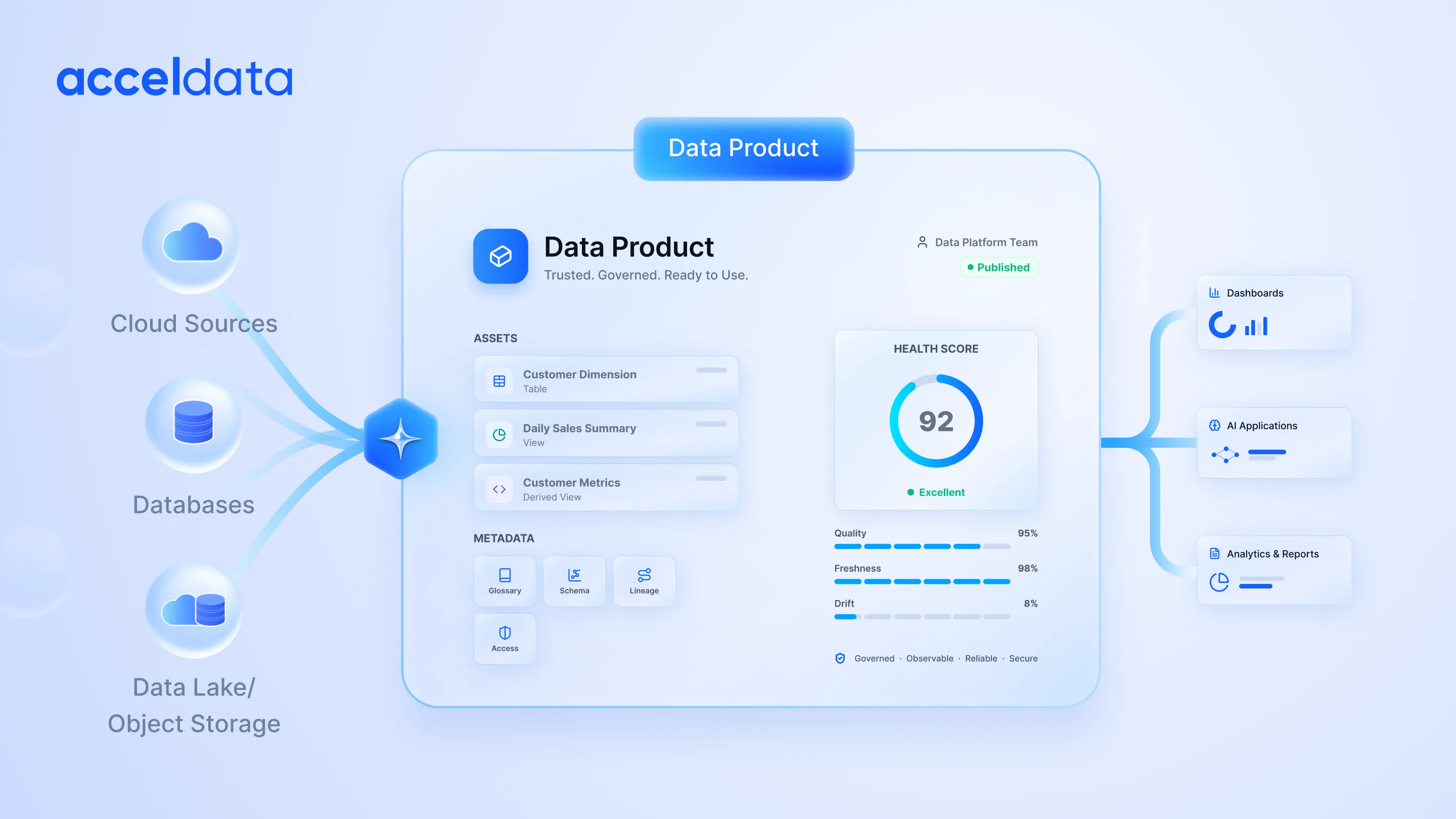
Another great tool for improving your data observability is a data pipeline monitoring dashboard. A monitoring dashboard plays a very important role in a healthy data observability framework. Using a performance dashboard to aid with data pipeline observability can benefit your organization in a number of ways. Some of the ways you can use a data observability platform to monitor your data pipelines include:
- Predict incidents and prevent them before they happen
- Automate data reliability across all data warehouses
- Optimize data pipeline costs
- Align your organization’s data strategies with its larger business strategies
- Track the journey your data takes from beginning to end
- Automatically identify drift and anomalies in your data pipelines
- Increase the efficiency and reliability of your data pipelines
Different kinds of observability dashboards are available from data observability vendors. It’s important to select the best monitoring dashboard for your organization’s needs.
Using all the tools at your disposal, like a monitoring dashboard, to help improve your organization’s data observability is one of the best ways to prevent a data pipeline performance issue before it happens.
Data Pipeline Audit
Anytime you need to determine how well a particular system is functioning, it’s a good idea to carry out an audit that can tell you more about the system’s performance in detail.
A data pipeline audit can help you verify the quality and reliability of the data coming in through your data pipelines. Your data pipeline architecture needs to be maintained with the right tests and monitoring tools to ensure it’s still providing accurate, high-quality data.
Following data pipeline architecture best practices is one thing you can do to make sure your data pipeline functions smoothly. However, no matter how diligent you are about sticking to best practices, you’ll likely still need to perform an audit from time to time. A data pipeline architecture diagram could be helpful for this task.
Every data pipeline example is vulnerable to anomalies. If you’re considering how to build a data pipeline, it’s important to take this fact into account. Carrying out periodic data pipeline audits and using a reliable data observability dashboard can help reduce the risk of errors in your data.
From Reactive Fixes to Proactive Confidence with Acceldata
Data pipeline monitoring transforms your operations from a cycle of reactive firefighting into a standard of proactive reliability. By maintaining continuous, real-time visibility, you don’t just reduce downtime—you actively neutralize security drift before it compromises your integrity. This shift creates a culture of trust that resonates across your entire organization.
Acceldata provides the AI-driven monitoring, automated alerting, and deep auditing required to scale alongside your most complex pipelines. We give your teams the visibility to detect subtle shifts in data posture and the confidence to act decisively.
Stop reacting to drift and start preventing it. Book your Acceldata demo today to achieve total pipeline observability and realize measurable efficiency gains in just weeks.
FAQs About Data Pipeline Monitoring
How are you monitoring your data pipelines, and what are you using to debug production issues?
We use centralized dashboards, logs, and tracing tools to monitor pipeline execution. Alerts and root-cause analysis help teams debug issues efficiently.
What metrics are most important for data pipeline monitoring?
Freshness, completeness, consistency, and volume are key metrics. Monitoring these ensures pipelines deliver reliable and accurate data.
How do you detect failures in data pipelines early?
Continuous monitoring with automated alerts flags anomalies as they occur. Early detection prevents issues from impacting downstream analytics.
How to monitor data pipelines for security drift?
Track access patterns, schema changes, and destination modifications continuously. Alerts for unusual activity help prevent compliance and security risks.
What’s the difference between pipeline monitoring and data observability?
Monitoring tracks pipeline health and performance metrics. Observability provides deeper insights into root causes, lineage, and system behavior.
How do logs and traces help debug pipeline failures?
Logs show errors and execution steps, while traces reveal data flow across systems. Together, they help pinpoint issues quickly.
How often should data pipelines be audited?
Audits should be continuous with automated reports for compliance. Periodic reviews complement real-time monitoring to ensure governance.
What are common challenges in monitoring production data pipelines?
Challenges include scaling monitoring across multiple pipelines, alert fatigue, and interpreting complex dependencies. Automation and AI-driven insights help overcome these obstacles.
Short Summary:
Data pipeline monitoring gives you real-time visibility into the health, performance, and security of your data workflows. By tracking metrics like freshness, completeness, consistency, and volume, analyzing logs, and mapping data lineage through traces, monitoring helps you catch issues before they impact business decisions. Modern dashboards and automated audits make it easier to enforce policies, prevent security drift, and maintain compliance. Organizations use continuous monitoring for faster issue detection, reduced downtime, and more reliable, trustworthy data for analytics and operations.