




.svg)




While many organizations attempt to implement data governance, only a subset achieves mature, sustainable governance programs. These organizations approach governance differently by integrating it deeply into their data platforms and workflows.
You sit across from your chief data officer as she reviews yet another failed governance initiative. The pattern feels familiar—strong kickoff meetings, detailed documentation, then gradual abandonment as teams return to their old habits. Sound familiar?
Yet some organizations crack the code. They build governance programs that not only survive but thrive as their data ecosystems expand. What sets these mature data governance programs apart? They don't treat governance as a checkbox exercise or a documentation project. Instead, they weave governance directly into the fabric of their data operations, making it as natural as running a data pipeline or building a dashboard.
These successful organizations understand that effective data governance best practices enterprises follow require more than policies and procedures—they demand a fundamental shift in how teams interact with data every day.
What Defines a Mature Data Governance Program
Understanding what constitutes a mature governance framework helps organizations assess their current state and identify improvement opportunities. Successful programs share several distinguishing characteristics that enable them to scale effectively while maintaining strong governance standards across expanding data ecosystems.
Clear data ownership
Mature organizations establish clear data ownership structures across their assets. This goes beyond simply assigning names to spreadsheets—it creates accountability at every level of the data lifecycle.
Common roles include:
- Data owners responsible for business accountability
- Data stewards responsible for governance enforcement
- Data platform teams responsible for infrastructure
This structure ensures governance responsibilities are clearly defined and understood throughout the organization.
Strong metadata infrastructure
Governance relies on accurate and comprehensive metadata. Without proper metadata management, organizations operate blindly, unable to track data quality, lineage, or usage patterns effectively.
Mature organizations maintain metadata systems that track:
- Datasets and tables
- Data pipelines and transformations
- Lineage relationships
- Data usage patterns
Automated governance processes
Data automation plays a central role in mature governance frameworks. Manual processes simply cannot keep pace with modern data volumes and velocity.
Examples include:
- Automated metadata collection
- Automated lineage tracking
- Automated data classification
Automation allows governance programs to scale with growing data ecosystems while reducing the burden on data teams.
Governance integrated with data platforms
Rather than operating separately, governance capabilities are integrated into the data platform itself. This ensures governance processes operate continuously across data pipelines and analytics systems, making compliance automatic rather than aspirational.
How Mature Enterprises Organize Governance Teams
Successful governance programs require well-defined organizational structures. The days of appointing a single "data governance manager" and hoping for the best have passed. Enterprise data governance strategy now demands thoughtful team design that balances central oversight with distributed execution.
Central governance team
Many organizations maintain a strong governance culture across teams responsible for setting the overall direction and maintaining consistency across domains.
Key responsibilities include:
- Defining governance policies
- Managing governance platforms
- Monitoring governance coverage
- Providing training and support
This team acts as the governance center of excellence, ensuring standards remain consistent while adapting to organizational needs.
Domain-level ownership
Individual business domains manage governance for their own data assets. This model recognizes that marketing teams understand customer data better than IT, while finance teams best understand revenue metrics.
Benefits of domain ownership:
- Contextual expertise: Domain experts understand data nuances
- Faster decision-making: Reduces bureaucratic delays
- Better compliance: Teams take ownership seriously
- Improved data quality: Issues get caught earlier
Collaboration between engineering and governance
Mature organizations ensure strong collaboration between data engineering teams, governance specialists, and analytics teams. This breaks down traditional silos that often doom governance initiatives.
How mature companies manage data governance successfully involves creating cross-functional teams where:
- Engineers build governance requirements into pipelines
- Governance specialists provide technical guidance
- Analytics teams validate data quality continuously
Governance Embedded in the Data Platform Architecture
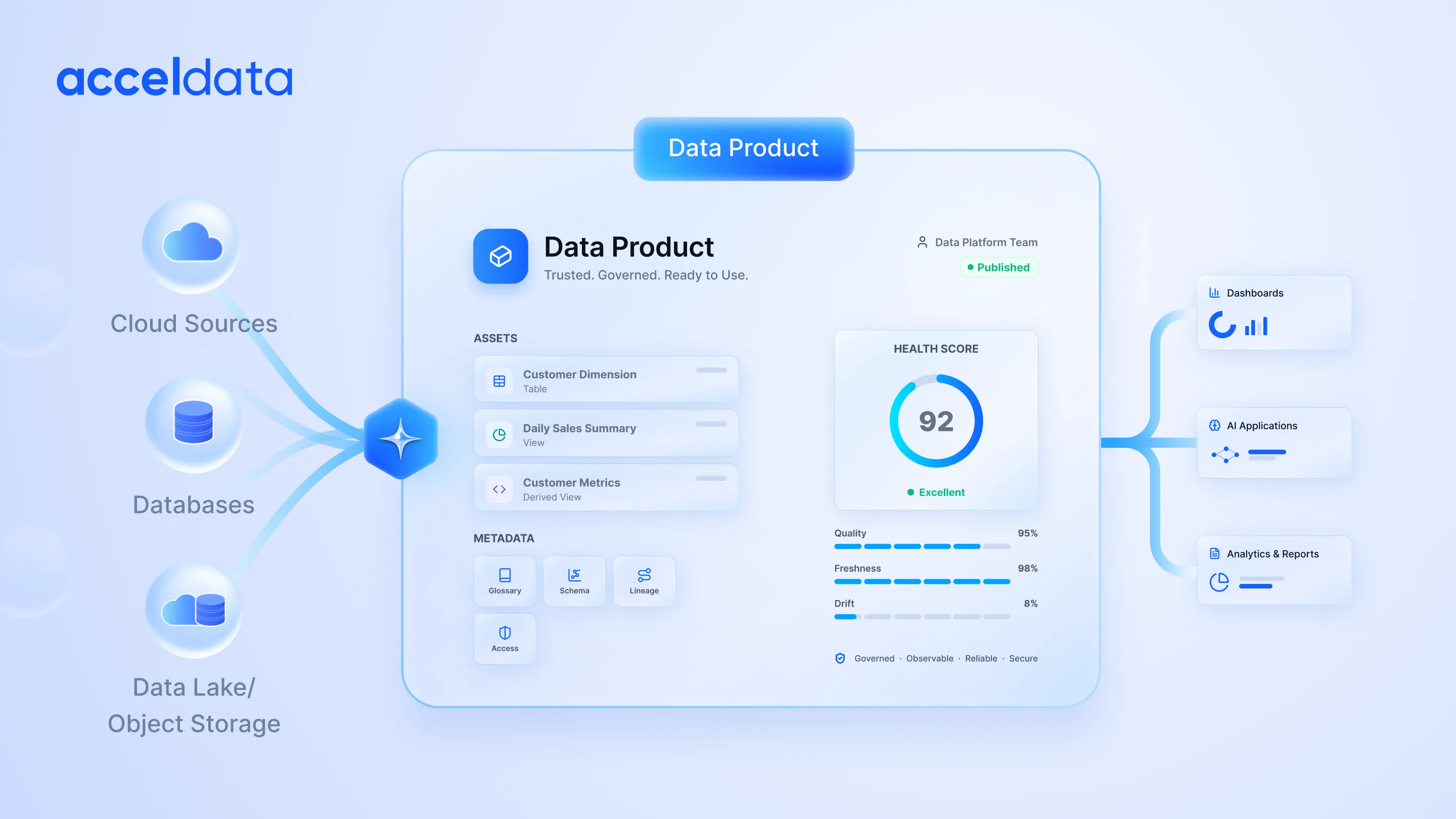
One defining characteristic of mature data governance programs is that governance capabilities are embedded directly into the data platform. This architectural approach makes governance an integral part of data operations rather than an afterthought.
Metadata collection at the source
Modern data platforms automatically capture metadata during data processing activities. This eliminates the manual documentation burden that causes many governance programs to fail.
Key metadata captured automatically:
- Schema information: Column names, data types, constraints
- Processing details: Transformation logic, computation rules
- Quality metrics: Null counts, uniqueness violations
- Access patterns: Who queries what data and when
Automated lineage tracking
Lineage systems track how data moves through pipelines and transformations. This visibility enables teams to understand the origins and dependencies of data assets without manual documentation.
Policy enforcement within data systems
Governance policies such as access controls and data classification rules are enforced directly within the data platform. This reduces reliance on manual governance processes and ensures consistent application.
Monitoring and observability
Governance programs often include monitoring systems that detect governance violations or anomalies. This allows organizations to respond quickly to governance issues before they impact business operations.
Key Practices Mature Enterprises Follow
Mature governance programs share several practical practices that help maintain long-term effectiveness. These data governance implementation best practices separate successful programs from those that struggle to gain traction.
Start with high-impact data domains
Rather than attempting to govern every dataset immediately, mature organizations prioritize governance for critical domains. This focused approach delivers quick wins while building momentum.
Priority domains typically include:
- Financial reporting data: Ensures regulatory compliance
- Customer data: Protects privacy and enables personalization
- Regulatory datasets: Meets audit requirements
- AI/ML training data: Ensures model reliability
Implement governance incrementally
Governance frameworks should grow gradually rather than attempting comprehensive coverage from day one. Organizations expand governance coverage as data ecosystems grow and teams gain experience.
Incremental implementation phases:
- Foundation: Establish core policies and tools
- Expansion: Add domains and capabilities
- Optimization: Refine processes based on feedback
- Maturation: Achieve steady-state operations
Align governance with business goals
Successful enterprise governance frameworks directly support business objectives rather than existing for their own sake. This alignment ensures continued executive support and funding.
Business alignment examples:
- Improving analytics reliability to support data-driven decisions
- Supporting regulatory compliance to avoid penalties
- Enabling AI adoption through high-quality training data
- Reducing data incidents that impact customer experience
Continuously improve governance processes
Governance programs require ongoing evaluation and refinement. Organizations regularly review governance metrics and update policies to reflect changing data environments and business needs.
Common Challenges Even Mature Organizations Face
Even organizations with advanced governance programs encounter ongoing challenges. Understanding these challenges helps set realistic expectations and prepare appropriate responses.
Rapid data platform evolution
Modern data stacks change quickly, introducing new tools and architectures regularly. Each new technology potentially disrupts existing governance processes.
Governance systems must adapt to:
- New data storage technologies
- Emerging processing frameworks
- Modern orchestration tools
- Cloud-native architectures
Scaling governance across teams
As organizations grow, maintaining consistent governance practices across multiple teams becomes increasingly difficult. Different teams may interpret policies differently or develop their own workarounds.
Managing complex data lineage
Tracking data lineage across distributed data systems remains technically challenging, especially when data flows through multiple tools and transformations.
Balancing governance and innovation
Organizations must balance governance controls with the need to maintain agility in data development and analytics. Too much control stifles innovation, while too little creates chaos.
Metrics Mature Organizations Use to Measure Governance Success
Successful governance programs track metrics that measure governance effectiveness. These metrics provide objective evidence of progress and identify areas needing attention.
Key governance metrics
Metadata Coverage: Percentage of datasets with complete metadata documentation
- Target: >95% for critical datasets
- Measurement: Automated scanning tools
Data Ownership Coverage: Percentage of datasets assigned to clear owners or stewards
- Target: 100% for production data
- Measurement: Ownership registry
Lineage Coverage: Extent to which data pipelines and transformations are captured in lineage systems
- Target: >90% for critical pipelines
- Measurement: Lineage tracking tools
Governance Policy Compliance: Percentage of datasets compliant with governance policies
- Target: >98% for sensitive data
- Measurement: Automated policy checks
Tracking these metrics helps organizations identify gaps in governance coverage and prioritize improvement efforts.
How Mature Organizations Make Governance Stick
Mature data governance programs differ significantly from early-stage initiatives. Rather than relying solely on policies or documentation, successful organizations build governance capabilities directly into their data platforms and operational workflows. Automation, strong metadata infrastructure, clear ownership structures, and cross-team collaboration enable governance programs to scale effectively as data ecosystems grow.
Organizations seeking to improve their governance capabilities can learn valuable lessons from mature enterprises that have successfully integrated governance into their data architecture and organizational culture. Success requires commitment, the right tools, and a willingness to embed governance into daily operations.
Acceldata's Agentic Data Management platform addresses these exact challenges through AI-first automation that actively manages governance at scale.
The platform's intelligent agents continuously monitor data quality, track lineage, and enforce policies across your entire data ecosystem. With capabilities like natural language data interaction through Business Notebook and the xLake Reasoning Engine powering autonomous operations, teams achieve 90%+ performance improvements while reducing operational overhead by up to 80%.
Ready to join the ranks of mature enterprise data governance strategy leaders?
Explore how Acceldata can accelerate your governance maturity journey. Book a demo!
FAQs
What defines a mature data governance program?
Mature governance programs include strong metadata infrastructure, clear data ownership, automation, and integration with data platforms.
How do mature enterprises implement governance?
They embed governance capabilities directly within data platforms and integrate governance with engineering workflows.
What roles are involved in enterprise governance programs?
Common roles include data owners, data stewards, governance administrators, and data platform teams.
How do organizations measure governance maturity?
Metrics such as metadata coverage, lineage coverage, and governance policy compliance help measure maturity.
Why do mature organizations automate governance processes?
Automation enables governance systems to scale efficiently across complex data ecosystems.