




.svg)


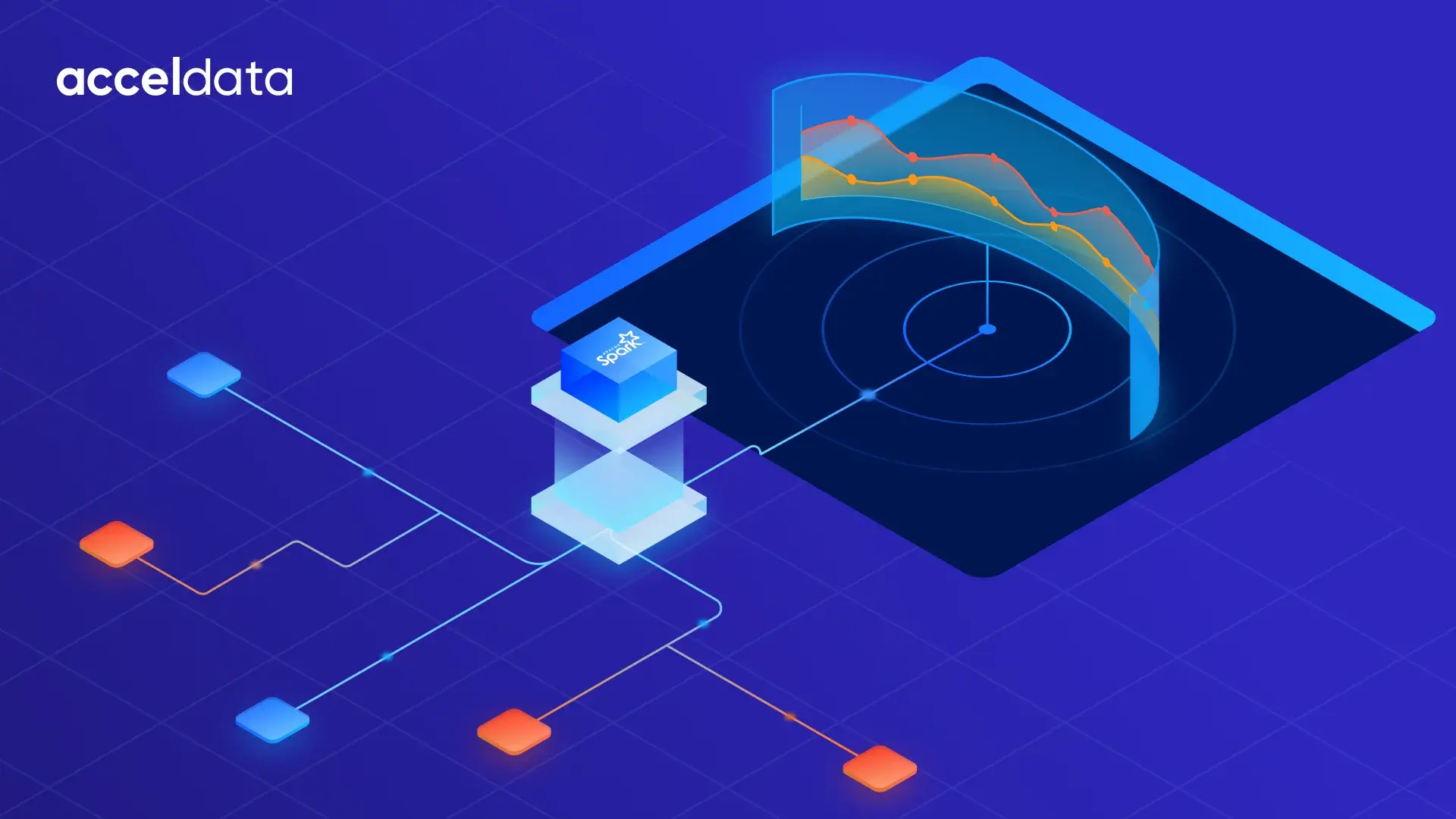

Most data engineering teams rely on the Spark History Server as their primary debugging tool, but it was never designed for real-time observability. This article explains the structural gap between post-hoc job history and the live, unified visibility modern Spark-on-Kubernetes teams actually need.
It is 2 AM. A pipeline is down. You open the Spark History Server and find incomplete event logs — or nothing at all. The driver crashed before writing them. The Kubernetes event that would have explained why has already aged out of the cluster.
This is expensive. A single hour of unplanned downtime costs more than $300,000 for over 90% of mid-size and large enterprises — and much of that cost comes not from the failure itself, but from the time spent figuring out what went wrong.
Most Spark failures on Kubernetes originate in the infrastructure layer beneath Spark. Whether the cause is an evicted pod, a reclaimed spot instance, or a scheduler that never found room for executors, the Spark History Server sees none of it, because it was never built to.
This article breaks down where the Spark History Server stops being useful, what that blind spot costs your team, and what real Spark observability looks like on Kubernetes.
What the Spark History Server Was Actually Built For
The Spark History Server (SHS) has one clearly defined purpose: reconstructing the Spark UI after an application completes.
By default, the live Spark web interface runs on port 4040 for the duration of a running application. It surfaces stages, tasks, RDD storage, executor state, and environment configuration. The moment the application terminates, that interface is gone.
To preserve it, you enable event logging and point it at a persistent directory. The Spark History Server reads from that directory and replays what the UI showed. The Spark documentation calls this section Viewing After the Fact.
The SHS depends entirely on those event logs. If the driver fails before flushing them — or never starts successfully — the History Server has nothing to reconstruct.
In other words, SHS is a job history tool, not an observability system. It answers: "What did Spark do during this execution?" — not "Why did this job fail, and what in the environment caused it?"
These are distinct categories. Job history is forensic. Operational observability is real-time. Conflating the two is where teams run into trouble.
The Visibility Gap Teams Don't See Until It's Too Late
On Kubernetes, failures often originate outside of Spark, which creates a massive visibility gap.
When a kubelet evicts a pod under resource pressure, it terminates that pod and marks its phase as Failed. That is a Kubernetes-layer action. Spark did not cause it. Therefore, Spark's event logs will not have a record of it.
When a container exceeds its memory limit, Kubernetes marks it with termination reason OOMKilled. You find this status in the Kubernetes runtime state, not in a Spark UI construct. This also applies to scheduling failures. When a pod cannot be placed on a node, Kubernetes generates an event with reason FailedScheduling. To see it, you run kubectl describe pod on the Spark driver pod.
However, Kubernetes Events have limited retention. The cluster does not guarantee they will still exist when you start investigating. If you are not capturing them in real time, the signal behind your failed job may be gone.
Detection is delayed, and root cause analysis takes far more time. Debugging has to span three systems before anyone has a clear picture. This is why data teams need data observability that operates across layers (not just Spark observability) as an operational requirement.
What Four-Tool Debugging Actually Looks Like
Here is a realistic on-call scenario for when a Spark job on EKS exits abnormally. This is the sequence data teams tend to follow:
Step 1: Spark UI or Spark History Server. You check stages and task failures. If event logs exist, you get Spark-internal detail. If they do not, you get nothing. You get no Kubernetes context.
Step 2: kubectl describe pod. You inspect the driver and executor pods for scheduler decisions and recent events. But if the incident happened more than a few hours ago, those events may already be gone.
Step 3: Cloud monitoring. If the cluster uses Spot instances, you check for interruption notices. AWS emits a two-minute warning before terminating a Spot instance. But that signal lives in EventBridge or instance metadata instead of Spark history. You have to look for it separately.
Step 4: Custom dashboards. Your team will build dashboards to correlate resource metrics with logs. But, unless those dashboards ingest Kubernetes Events and cloud interruption signals, you will not get the full causal chain.
Every tool requires a different login, a different query model, and different tribal knowledge. Time-to-resolution stretches because the signals are scattered across four places. This is exactly the problem that Acceldata's anomaly detection is built to address.
What Real Apache Spark Monitoring Requires
Real Apache Spark monitoring on Kubernetes comes from correlated, real-time visibility across every layer of the execution stack.
The OpenTelemetry observability primer defines observability as the ability to answer new questions about a system from its emitted signals (like logs, metrics, traces) without adding any new instrumentation during an incident.
If the signals are siloed, you cannot answer cross-layer questions without additional work during a crisis. For Spark on Kubernetes, the minimum signal set is:
- Spark execution state: stages, tasks, executors
- Kubernetes pod lifecycle: scheduling outcomes, termination reasons, and eviction events
- Cloud infrastructure signals: node disruption, spot interruption
All these signals need to be captured consistently, correlated by job identity, and displayed in a single dashboard. Kubernetes Events have limited cluster retention. If you are not collecting them continuously, these signals will disappear.
This is the architectural requirement xDP is built to serve. Acceldata's platform separates the Control Plane from the Data Plane. The Data Plane runs inside your environment. The Control Plane handles monitoring, alerts, and policy management. This provides cross-layer correlation across the Spark execution state, the Kubernetes infrastructure events, resource usage, and system-level signals, all in one view.
For teams dealing with recurring, hard-to-classify failures, pair xDP with Acceldata's automated resolve workflows so that they quickly detect signals and act on them. The Data Pipeline Health Agent also monitors pipeline executions in real time across Airflow and other orchestration tools.
Why This Matters More as Workloads Scale
The visibility gap we just explained is manageable at low job concurrency. But it becomes a real operational problem at scale. When dozens of Spark jobs run concurrently, each one generates pod lifecycle events across a shared cluster. Because of this, the signal volume outpaces what any team can manually correlate.
Kubernetes Events age out on cluster timelines. At higher concurrency, it is quite probable that a critical event expires before anyone inspects it. You can’t count on data reliability.
The debugging pattern changes at scale, too. On-call engineers stop investigating specific failures. Instead, they start triaging, which failures even warrant investigation.
The signal-to-noise degrades, and escalations increase. At this point, the team needs institutional knowledge to navigate four disconnected tools, and that is at risk anytime a senior engineer leaves.
Teams usually respond by writing more automation around the same fragmented toolchain. That just adds maintenance burden without improving data quality.
The right answer is contextual memory. When the platform remembers past incidents (which pod configurations failed, which spot instance patterns preceded evictions, which scheduling conditions caused job delays), teams won’t have to re-diagnose the same kind of failure from scratch every time.
For more on how observability as code brings structure and consistency, see Acceldata's guide on implementing observability as code for scalable data systems.
Stop Debugging Backward, Build Visibility Into the Stack
The Spark History Server is great for post-run performance analysis, stage-level tuning, and task distribution review. But it was not built to tell you why a Kubernetes scheduler refused to place your executor pod. Or why an AWS Spot interruption terminated your node with two minutes of warning that nobody captured.
Real Spark observability means Spark execution state correlated with Kubernetes pod lifecycle events and cloud infrastructure signals, all captured durably and surfaced in one place. xDP's unified control plane delivers exactly this: driver and executor logs, OOMKill signals, eviction reasons, and scheduling failures in a single view.
Stop rebuilding the causal chain manually at 2 AM. Book a demo at acceldata.io to see what unified Spark monitoring visibility actually looks like for your stack.
Spark Observability FAQs
What is the difference between the Spark UI and the Spark History Server?
The live Spark web UI runs on port 4040 and shows active application details only during execution. When the application stops, the interface disappears. The Spark History Server reconstructs that UI by reading persisted event logs. If those logs were never written, the History Server has nothing to show. Both are application-level tools. Neither reaches the Kubernetes infrastructure layer, where most production failures actually begin.
Why doesn't the Spark History Server show OOMKilled events?
OOMKilled is a Kubernetes container termination reason. It means a container exceeded its memory limit and Kubernetes killed it. That status is part of the Kubernetes runtime state. It lives in pod metadata, not in Spark's event log. The Spark History Server can only replay what Spark logged during the application. Since Kubernetes makes the kill decision independently of Spark, Spark never records it. To see OOMKill reasons, you need to inspect pod status directly via kubectl describe pod . Or use a platform like xDP that captures Kubernetes pod lifecycle events alongside Spark execution data.
What tools do teams typically use alongside the Spark History Server for observability?
Most teams running Spark on EKS end up using four tools in combination:
- The Spark History Server for post-run job analysis.
kubectl describe podfor pod-level events and scheduling decisions.- Cloud monitoring (AWS EventBridge or instance metadata) for Spot interruption notices.
- Prometheus or Grafana for infrastructure-level resource metrics.
What does a unified Spark observability platform need to cover?
A unified platform needs to correlate at least three layers simultaneously:
- Spark execution signals (stages, tasks, executors)
- Kubernetes pod lifecycle events (scheduling outcomes, OOMKill reasons, eviction events).
- Cloud infrastructure signals (spot interruption notices, node disruption).
Note: Kubernetes Events have limited cluster retention. A proper observability platform captures them durably in real time so they are available for investigation hours or days later.
Is the Spark History Server still useful in a modern Kubernetes environment?
Yes. For post-run Spark-level analysis, the Server is a practical tool. It’s great for reviewing completed job performance, identifying stage bottlenecks, analyzing task distribution and shuffle behavior, provided event logs were persisted correctly. But it cannot work as an operational observability system. It is a forensic tool for completed jobs. Production Kubernetes environments need real-time, cross-layer visibility that covers the infrastructure and scheduling events Spark never logs.